For more than four decades I worked in manufacturing, where I witnessed the introduction of robotics and computer vision systems that transformed quality control. Today I’m recreating those same technologies on a desktop scale, building a small automated inspection system that demonstrates how robotics, computer vision and artificial intelligence can work together to inspect glass bottles.
View The Project
This project combines mechanical design, electronics, computer vision and artificial intelligence to create a desktop automated inspection system.
Glass bottles travel along a small conveyor where they are detected, photographed and analysed using computer vision. The system is designed to demonstrate many of the same principles found in modern production lines, including automated inspection, defect detection, object tracking and data-driven decision making.
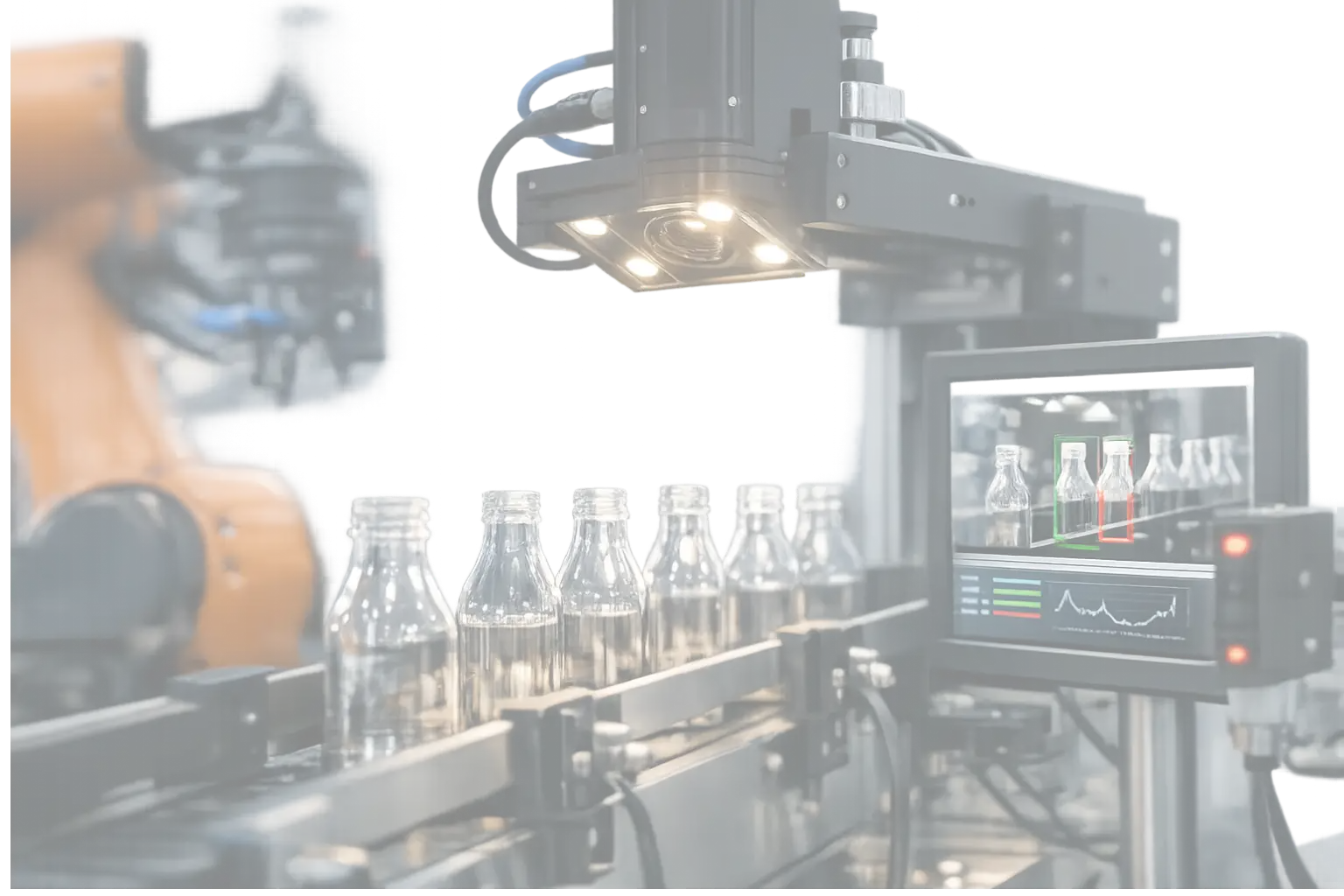
Rather than replicating an industrial production line, the aim is to better understand the technologies that make modern manufacturing possible.
Modern manufacturing relies on automated inspection systems to identify defects consistently, accurately and at production speeds. This project explores how those same principles can be recreated on a desktop scale using robotics, computer vision and artificial intelligence.
The aim is to develop the system incrementally, introducing new inspection capabilities as the project evolves. Each Engineering Log documents the latest improvements, bringing the desktop inspection system a little closer to the type of automated quality control found on industrial production lines.
Every aspect of the project is inspired by the technologies used in modern manufacturing. By combining robotics, computer vision, embedded systems and AI, this project explores the principles behind automated quality control on a practical desktop scale.
The inspection system is designed using CAD software before being manufactured using 3D printing and standard engineering components. This approach allows ideas to be developed quickly, tested, refined and modified as the project evolves.
A Raspberry Pi acts as the central controller, coordinating cameras, sensors, motors and software. Embedded systems bring together the hardware and software that allow the inspection process to operate as a single integrated system.
The conveyor uses motors, sensors and motion control to move bottles through the inspection process. Robotics provides consistent positioning and repeatable movement, creating the stable conditions needed for accurate automated inspection.
A camera continuously captures images of each bottle as it travels along the conveyor. Computer vision software analyses these images to identify defects, measure fill levels, verify labels and extract information that would otherwise require manual inspection.
Artificial intelligence complements traditional computer vision by recognising more complex patterns and variations. As the project develops, AI will be explored to classify defects, improve inspection accuracy and adapt to conditions that are difficult to define using fixed rules alone.
Throughout more than four decades in manufacturing I worked in environments where quality, consistency and continuous improvement were central to daily operations.
During that time I witnessed production lines evolve through the introduction of robotics, computer vision and increasingly intelligent automation. These technologies improved repeatability, increased inspection capability and helped manufacturers achieve higher standards of quality.
This website documents my personal exploration of those same ideas through practical engineering projects, combining software, electronics and mechanical design to better understand the technologies shaping modern manufacturing.
Glass manufacturing has been a significant part of my professional career,
making it a natural choice for demonstrating automated inspection.
Industrial automation has always fascinated me because it brings together engineering
disciplines that normally exist separately.
A single inspection system combines mechanics, electronics, software, optics, artificial intelligence and
data analysis into one integrated solution.
Building a desktop version allows these
technologies to be explored, understood and demonstrated without the scale or
cost of industrial equipment.
Nick Hilton
nick@nickhilton.uk
Wigan, England